


Shaxian's mouthwatering snacks lure entrepreneur









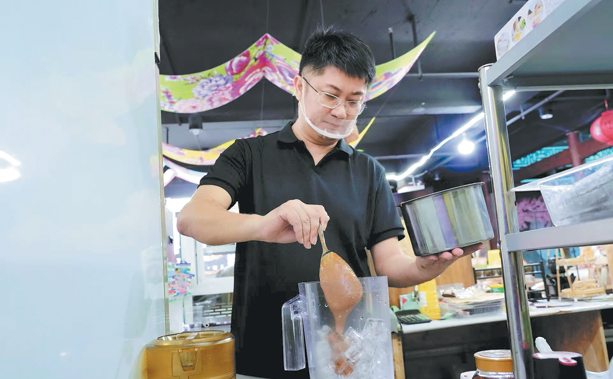
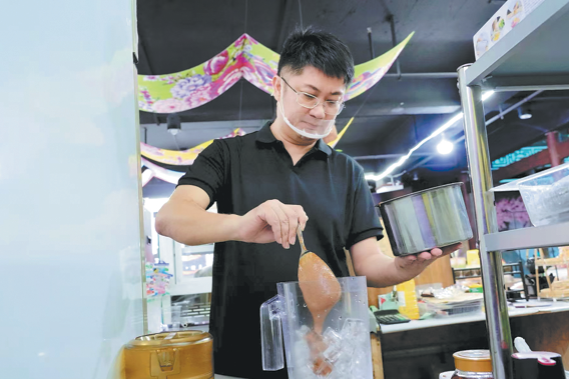
Inspired by a bowl of Shaxian peanut sauce noodles he ate many years ago, Huang Yu-hao, an entrepreneur from Taiwan, traveled to the birthplace of the snack — Shaxian county in Sanming, Fujian province — and opened a store blending local flavors with those from his hometown.
Shaxian snacks, which boast more than 200 varieties including peanut sauce noodles, wontons and meaty soups, are known for their deliciousness and reasonable price. Once a local street delicacy, they have evolved into a nationwide sensation, with franchises spread across the country.
Huang's connection with Shaxian snacks dates back to 2000, during a family visit to Xiamen in Fujian. It was then that he first tasted peanut sauce noodles, a signature Shaxian dish. The budget-friendly food typically features chewy noodles tossed in a savory, rich sauce made from ground peanuts, soy sauce and fragrant scallion oil.
"Back then, a bowl of noodles cost only 0.5 yuan (7 cents), but the rich, mellow peanut sauce was unforgettable," Huang said. The memory later became the inspiration for his business.
In late 2023, attracted by local investment promotion policies, Huang left the big city and established the Min-Taiwan Inn at the Shaxian Snack Cultural Plaza in Sanming, a name symbolizing the connection between Fujian and Taiwan. The 2,000-square-meter complex integrates snack and tea restaurants with a souvenir shop.
Huang merged Shaxian's signature peanut sauce with Taiwan's famous pineapple cake, creating a peanut sauce pineapple cake. The product quickly sold out after its launch and became a must-buy for tourists. Other innovations, including peanut sauce egg rolls and peanut sauce ice cream, followed.
He also introduced an introvert-friendly dining area featuring 12 single-seat booths separated by partitions, with walls decorated with illustrations by a Taiwan cartoonist. The space offers diners a private and comfortable environment. Huang has also pioneered a business model that combines tea culture with local snacks.
"We experimented with presenting Shaxian snacks in a way that appeals to younger generations, and the results have been surprisingly good," he said.
His entrepreneurial journey coincides with Fujian's latest efforts to deepen cross-Strait exchanges and economic cooperation. Huang has received support in areas such as rent subsidies, housing and schooling for his children.
"All of this eliminated my worries and allowed me to focus more on my business," Huang said. His wife and two children have since moved to Shaxian, which the family now considers their second home.
Beyond entrepreneurship subsidies, Sanming plans to offer free vocational skills training to 200 young people from Taiwan each year, covering 14 categories such as Shaxian snacks and tea art, to boost employment and entrepreneurship opportunities.
Efforts to introduce the cuisine to Taiwan are gaining momentum. After the first flagship Shaxian snack store opened in Taoyuan in May, eight more branches have been established in cities including Taipei and New Taipei.
Local authorities announced recently that Taiwan residents who open Shaxian snack restaurants on the island will receive a one-time entrepreneurship subsidy of 5,000 yuan.
At a cross-Strait food festival held in Sanming in December, Lin Joinsane, former chairman of the Straits Exchange Foundation from Taiwan, said snack cultures on both sides of the Strait share deep roots and can serve as a medium for strengthening economic, trade and cultural exchanges.
"Food is the warmest bridge spanning the Strait," Huang said. He plans to participate in traditional craftsmanship training in January, hoping to bring authentic Shaxian snacks to the Taiwan market.
Looking ahead, Huang said he and his team are developing creative cultural fridge magnets that allow tourists to hear the stories of Shaxian snacks simply by touching them.
Sun Jie contributed to this story.
Contact the writers at zhangyi1@chinadaily.com.cn






- Shaxian's mouthwatering snacks lure entrepreneur
- Cluster of ancient stone city sites found in Yulin
- Chinese family bonds withstand test of time
- Minecraft challenge breathes new life into rich cultural past
- HK community strongly supports Lai's conviction
- Cross-Strait collaboration key to nation's long-term well-being