


When Japan's history becomes a security threat









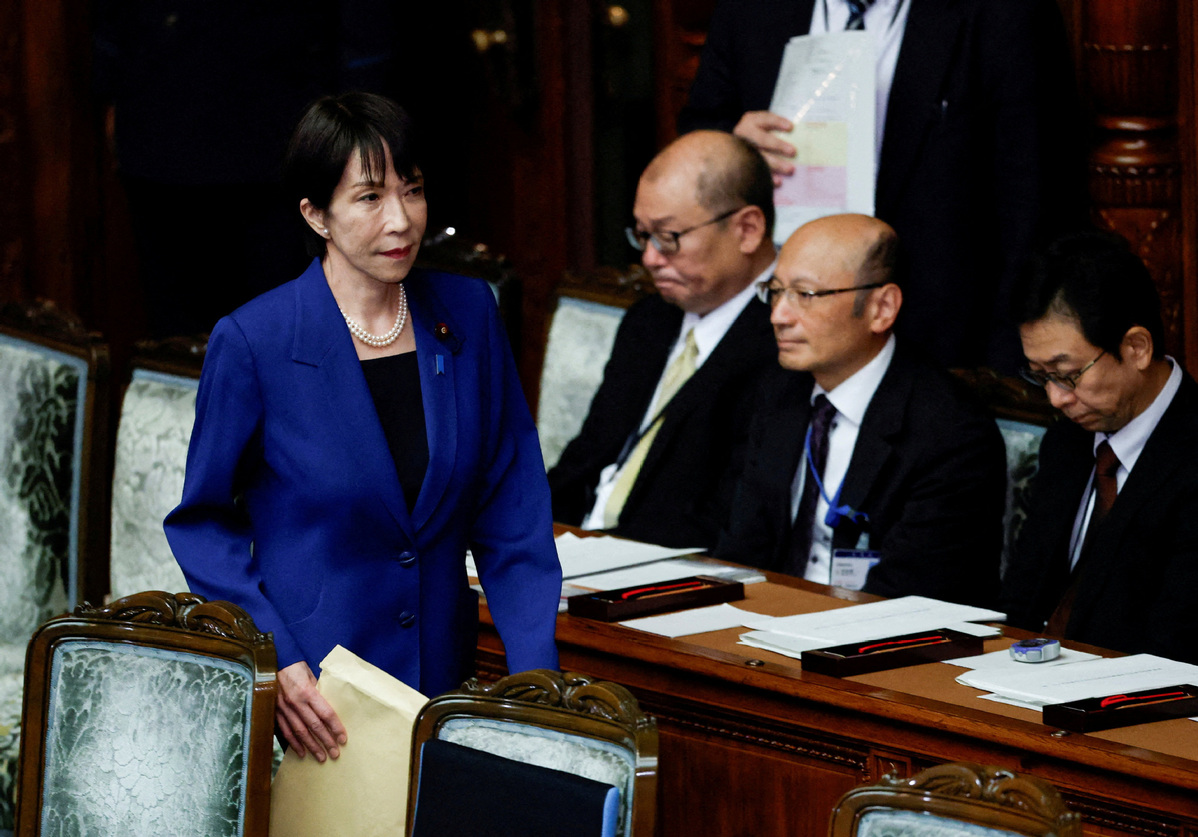
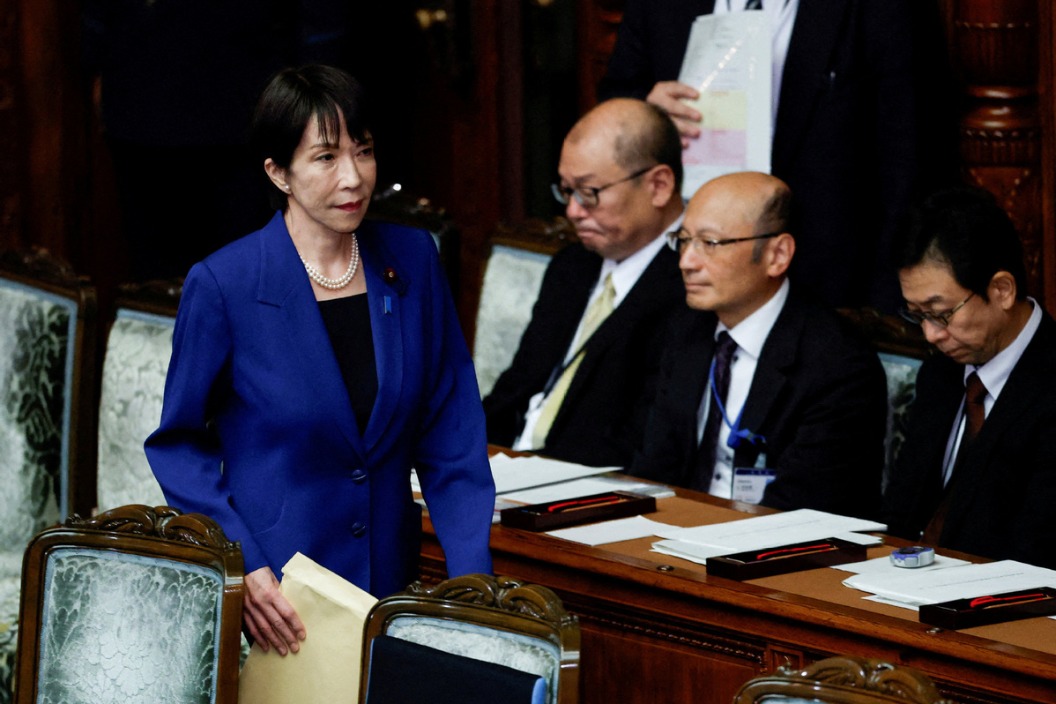
The ongoing war of words is intensifying between China and Japan. The thrashing on traditional and newer media platforms is seen as useful for shoring up political bases, and perhaps even expanding support. This is especially true for Japanese Prime Minister Sanae Takaichi who assumed office in October. Despite robust polling numbers, she still has to work hard to present herself as a strong leader at home lest she trips and becomes yet another of Japan's revolving-door prime ministers.
Unfortunately, Takaichi's first attempt to be seen as a strong stateswoman — like Margaret Thatcher or Angela Merkel — was a direct challenge to China. During a parliamentary session on Nov 7, less than three weeks after she assumed office, Takaichi said that a hypothetical Chinese attack or blockade of the Taiwan region could constitute a "survival-threatening situation" for Japan and impel the country's armed forces to act.
Beijing erupted in response while many of Takaichi's defenders were quick to counter back: What's the big deal? The explosive standoff shows that it is indeed a big deal. Given the one-China principle, the equilibrium in East Asia has rested on Japanese heads of state not referring to Taiwan in such a manner. Regardless of how people in Taiwan describe themselves or the various ways Japan and the US supports the authorities in Taiwan, Takaichi broke that unwritten rule by her now infamous remarks on Taiwan.
Notably, her remarks came fast on the heels of friendly first meetings with various world leaders at home and abroad, including US President Donald Trump and Chinese President Xi Jinping. The timing of her comments unleashed a torrent of speculation amid mudslinging on social media. Did Takaichi intend to poke China in the eye? Or did she make the comment in keeping with her longstanding hawkish positions on Japanese security and Taiwan? Her visit to Taipei in April as a parliamentarian raised eyebrows when she suggested Japan and the Taiwan authorities form a "quasi-alliance" with India, Europe and Australia.
To be sure, it no longer matters what Takaichi's intentions were. What matters is that the ensuing firestorm has reignited the so-called "history wars" between China and Japan. Even though her Nov 7 remarks did not directly touch on the "history wars", she is a well-known champion of the obdurate belief held by a substantial segment of the Japanese population that refuses to empathize with the suffering caused under the Japanese imperial rule and wars from 1894 to 1895 and 1931 to 1945. The fact is that Japan took possession of Taiwan after defeating China in 1895 and the island was returned to China after Japan surrendered in 1945. Japan's new prime minister reopened old wounds with her remarks.
Her Nov 7 grandstanding bleeds into core components of the "history wars". These include but are not limited to the 1937 Nanjing Massacre, the so-called "comfort women" system, which is an awful euphemism for the state-sponsored sexual slavery throughout the Japanese empire, and Japan's ongoing denial of government involvement in the diabolical Unit 731 biological warfare experimentation site in Harbin and other places. How Japanese school textbooks depict this heinous chapter of Japanese history and how Japanese politicians honor those killed during the nation's imperialistic drive by paying homage at the notorious Yasukuni Shrine in Tokyo add fuel to this fire.
As a parliamentarian, Takaichi has publicly visited Yasukuni many times since 2005. Fast forward to November 2025, she relaunched the "history wars" because decades of denialism in Japan — including her impassioned participation — has turned history into a security threat. Even though she did not say anything about history on Nov 7 and has not celebrated her election at Yasukuni, the outcome of her action was the exact opposite of what her predecessor Shigeru Ishiba did during the Aug 15 commemoration of the 80th anniversary of Japan's defeat.
A former head of Japan's defense agency and defense minister, Ishiba is far from dovish on security matters and makes clear he would not run away if Japan is "attacked". But even though it was widely anticipated that he would make a statement on Aug 15, Ishiba did not say anything about Japan and the World War II on the occasion. Clearly, Ishiba understands the power of words as divisive weapons and knows that careless words get no one anywhere. But politicians like Takaichi, who are influenced by former prime minister Shinzo Abe, regard such prudence with disdain.
The author is a professor of history at the University of Connecticut and visiting professor of Japanese Studies at the National University of Singapore.
The views don't necessarily reflect those of China Daily.
If you have a specific expertise, or would like to share your thought about our stories, then send us your writings at opinion@chinadaily.com.cn, and comment@chinadaily.com.cn.