


Researchers find approach to cultivate high-manganese, low-cadmium rice









BEIJING -- Chinese researchers have found a major quantitative trait locus (QTL) that can be used to cultivate high-manganese, low-cadmium rice, the Chinese Academy of Agricultural Sciences (CAAS) said in a statement Tuesday.
According to Qian Qian, chief expert and researcher in the field at CAAS, people often have an inadequate intake of manganese, an essential mineral in bone formation and the digestion of cholesterol, carbohydrates and protein.
Although the manganese content in rice grains can be increased via biological enhancement, this also increases the content of cadmium, a poisonous heavy metal, making the control of the elements in rice a major challenge, he said.
Researchers created a strain combined with a high-manganese strain and a low-manganese strain, and detected a major QTL via a high-density genetic map.
They found that the QTL contained a gene that regulated and controlled the absorption of manganese and had a significant drop in cadmium, improving the root system capability of absorbing manganese.
The research was subsidized by the National Natural Science Foundation of China.





- Alliance of Open Life Science expands global reach with new membership invitations
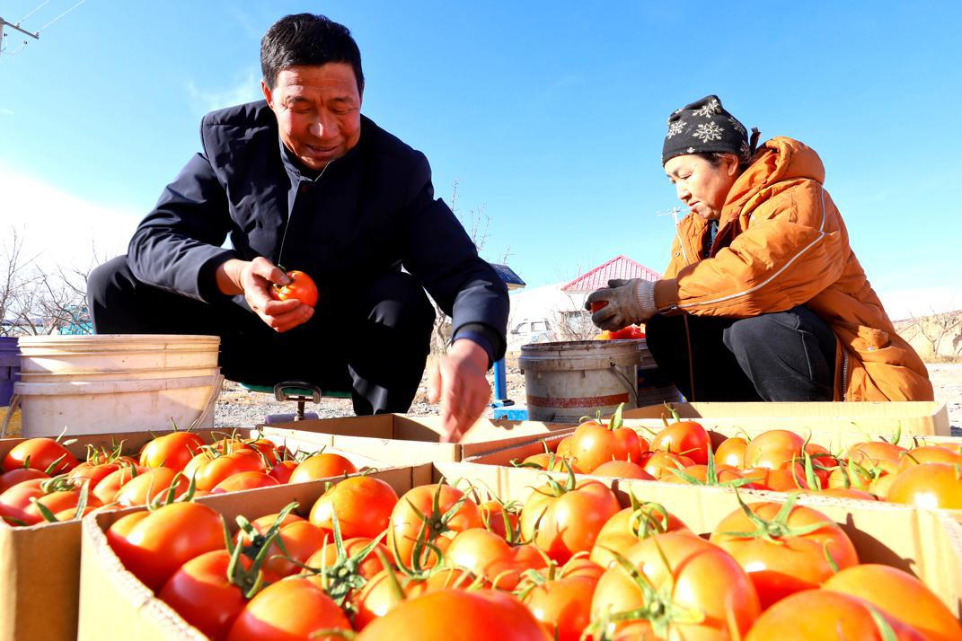
- Winter harvest keeps markets supplied in Linze, Gansu
- Wanfenglin's karst peaks wear ethereal winter veil in Guizhou
- Spokesperson reiterates resolute opposition to foreign interference in Taiwan question
- Innovation sustains Beijing's winter crayfish palate
- Chinese research named among Physics World's top 10 breakthroughs of 2025