
Siheyuan: Yantai's traditional Chinese houses dense with symbolism
China's traditional courtyard-style houses, or siheyuan, are usually associated with the narrow winding streets of Beijing, but perfectly-preserved courtyard mansions can also be found all over Yantai and the Shandong Peninsula.
Siheyuan are a historical type of residence that was commonly found throughout China, most famously in Beijing, Anhui, southern Jiangsu, Shandong and Shanxi provinces. They are generally composed of an enclosed square yard surrounded with buildings on all four sides.
Throughout Chinese history, the siheyuan design was the basic pattern used for residences, palaces, temples, monasteries, family businesses and government offices. In ancient times, a spacious siheyuan would be occupied by a single, usually large and extended family, signifying wealth and prosperity. Today, many remaining siheyuan are still used as housing complexes.
Yantai's courtyard houses have been praised by scholars and experts at home and abroad for their classic Chinese aesthetic features, and have been listed as one of Shandong Peninsula's most traditional styles of residential building.
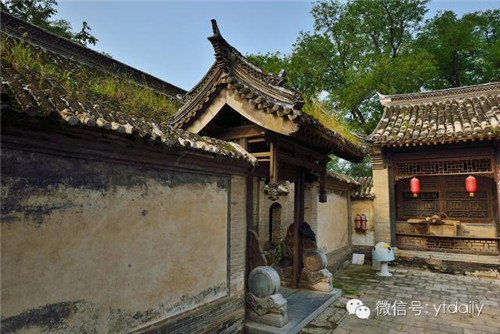
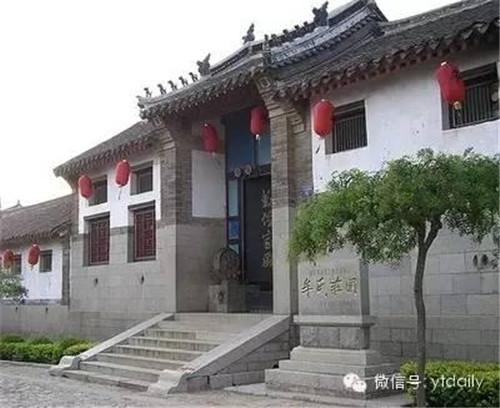
Classic examples of siheyuan in Yantai include Wang's dwelling house in Yanchang village, Fushan district, Fu's dwelling house in Fujia village, Zhifu district, Zhang's dwelling house in Shaojiajiang village, Muping district, and Mu's dwelling house in Qixia.
 |
|
Wang's dwelling house in Yanchang village,Fushan district, Yantai [Photo/ytdaily] |
 |
|
The front gate of Mu's dwelling house in Qixia, a county-level city in Yantai [Photo/ytdaily] |