


Evidence mounts of Japan's wartime atrocities
Archives: Biological warfare proves to be ‘state crime’









Fresh evidence shows that the cultivation of pathogenic bacteria by Unit 731, the notorious biological warfare unit of the Japanese Imperial Army operating during World War II, was not for the production of vaccines, but for the mass destruction of human life.
The new evidence is part of a collection of declassified archive documents detailing Soviet interrogations of Unit 731 members. The documents were released on Saturday by the National Archives Administration of China.
The archives, provided by Russia, included interrogation records of Unit 731 members, investigation reports on their crimes, and internal Soviet correspondence spanning from May 1939 to December 1950, according to the administration.
The archives primarily focus on the Khabarovsk War Crimes Trials, which were Soviet hearings of 12 members of Unit 731 charged with preparing and implementing biological warfare and conducting human experimentation during World War II. For the first time, the investigation and interrogation processes before the trial were disclosed.
During the Chinese People's War of Resistance Against Japanese Aggression (1931-45), the Japanese invading forces established a biological warfare network across multiple Asian countries, with Unit 731 located in Harbin, a city in Northeast China's Heilongjiang province.
Under the program, experiments were conducted on civilians to develop chemical and biological weapons. At least 3,000 people were killed by Unit 731, and more than 300,000 people in China were killed by the Japanese Army's biological weapons, according to online government services portal China Services Info.
The forensic conclusion reached by Soviet experts in medicine, microbiology and parasitology through comprehensive analysis stated that the (cultivation) process concluded with the production of live, active, toxic bacteria, which were then deliberately used to infect large populations. In contrast, when manufacturing vaccines, these toxic bacteria must be killed, according to the newly released archive documents.
Moreover, the archives show that Unit 731 conducted three bacteriological warfare operations outside Northeast China from 1940 to 1942, including the airdrop of plague-infested fleas over Zhejiang and Hunan provinces and the contamination of waters and fields with deadly germs along the Zhe-jiang-Jiangxi Railway.
Kiyoshi Kawashima, a major general and former chief of the bacteria production division in Japan's Unit 731, admitted in his testimony that in central China, Unit 731's expeditionary force colluded with Unit 1644, a Nanjing-based satellite unit of Unit 731, to carry out military sabotage missions ordered by headquarters.
"They used plague, cholera and typhoid bacteria to infect Chinese military sites and transportation lines. Civilians in these areas were also forced into the bacteriological warfare," according to the testimony.
Kawashima acknowledged that the special cultivation of bacteria by Unit 731 and the Japanese military's use of deadly pathogens against Chinese troops and civilians clearly violated international treaties and obligations prohibiting the use of such weapons in warfare.
"I now realize that the methods we used, which involved experimenting on living humans and causing their deaths by infecting them with deadly bacteria, were cruel, inhumane and criminal acts against humanity," he confessed in one statement.
In 1945, on the eve of the Japanese Army's defeat, Unit 731 destroyed base facilities, massacred test subjects and eliminated evidence of their crimes. During the postwar Tokyo Trials, a deal between Japan and the United States allowed key members of Unit 731 to get away with their crimes, according to Gong Wenjing, director of the international research center on Unit 731 at the Harbin Academy of Social Sciences.
The Khabarovsk trials, which were the first in history to specifically target germ warfare criminals, held accountable the war criminals who escaped justice at the Tokyo Trials, and exposed more crimes committed by the Japanese military, Gong said.
"The newly released archives include firsthand accounts from the biological war perpetrators. Their testimony contains detailed accounts of victims' lives in Unit 731, their painful reactions during experiments, and casualty data, all of which reveal the inhumane nature of the Japanese Army's atrocities," she added.
The archives complement and corroborate China's archives on the crimes of Unit 731, forming a complete chain of evidence that confirms Japan's biological warfare as an "organized, premeditated and systematic state crime", according to Zhou Zhenfan, an official responsible for archives management at the China Central Archives.
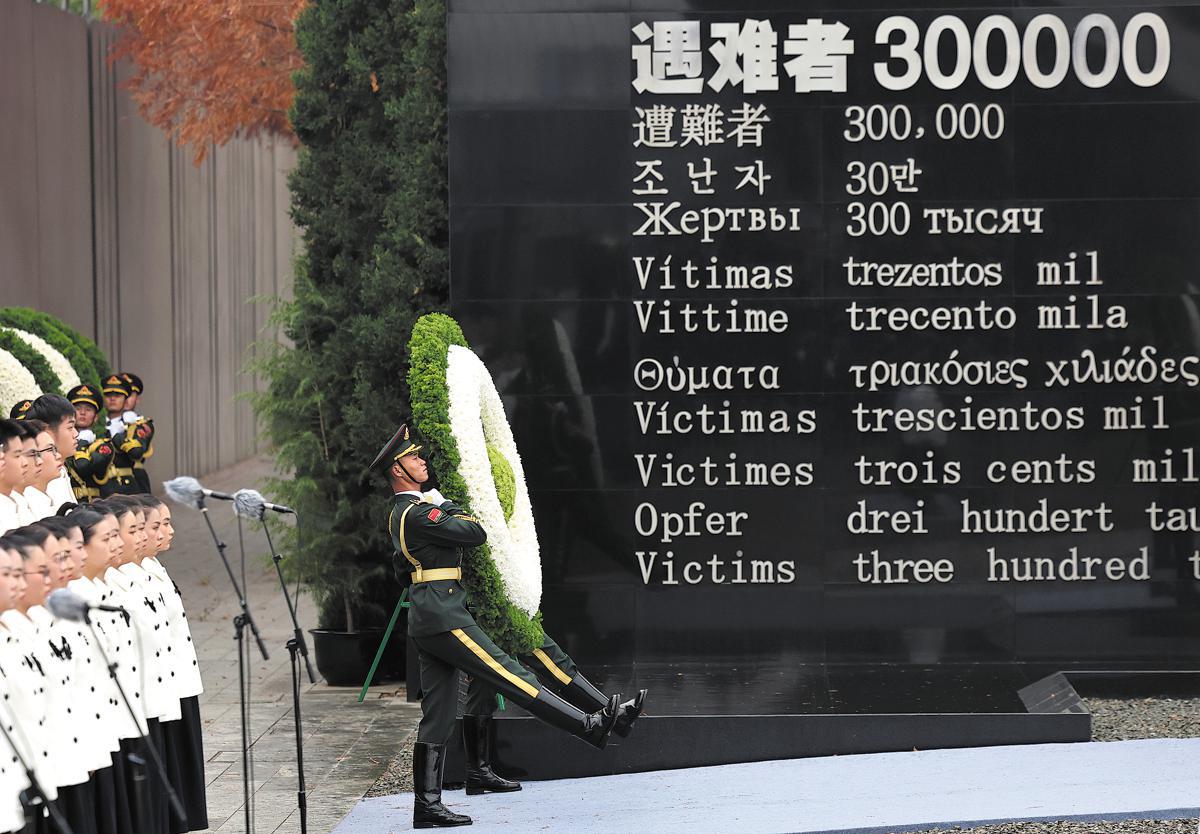
The release of the archives coincided with the 12th National Memorial Day for Nanjing Massacre Victims.
As this year marks the 80th anniversary of the victory in the Chinese People's War of Resistance Against Japanese Aggression and the World Anti-Fascist War, preventing the resurgence of Japanese militarism is a shared commitment of the international community, said Zhao Cong, director of the department of international exchange and cooperation of the National Archives Administration of China.
"The release of these archives once again provides indisputable evidence of the crimes committed by the Japanese Army, and they hold significant value in restoring historical truth and promoting a correct understanding of World War II history," Zhao added.
xunuo@chinadaily.com.cn





- Geminid meteor shower seen across China
- Sustainable agriculture in focus at Hainan forum
- Road accident in East China kills 4
- Health Bureau: Free Chinese medicine services for Tai Po fire victims
- Satellite launch marks a new milestone in UAE-China cooperation
- HK fire: 4,510 residents in shelters as support fund reaches HK$3.6b