

Brain-computer interface gives hope to paralyzed people
Major advances made, with neural technology aiding movement in clinical phase










Patients' hopes lifted
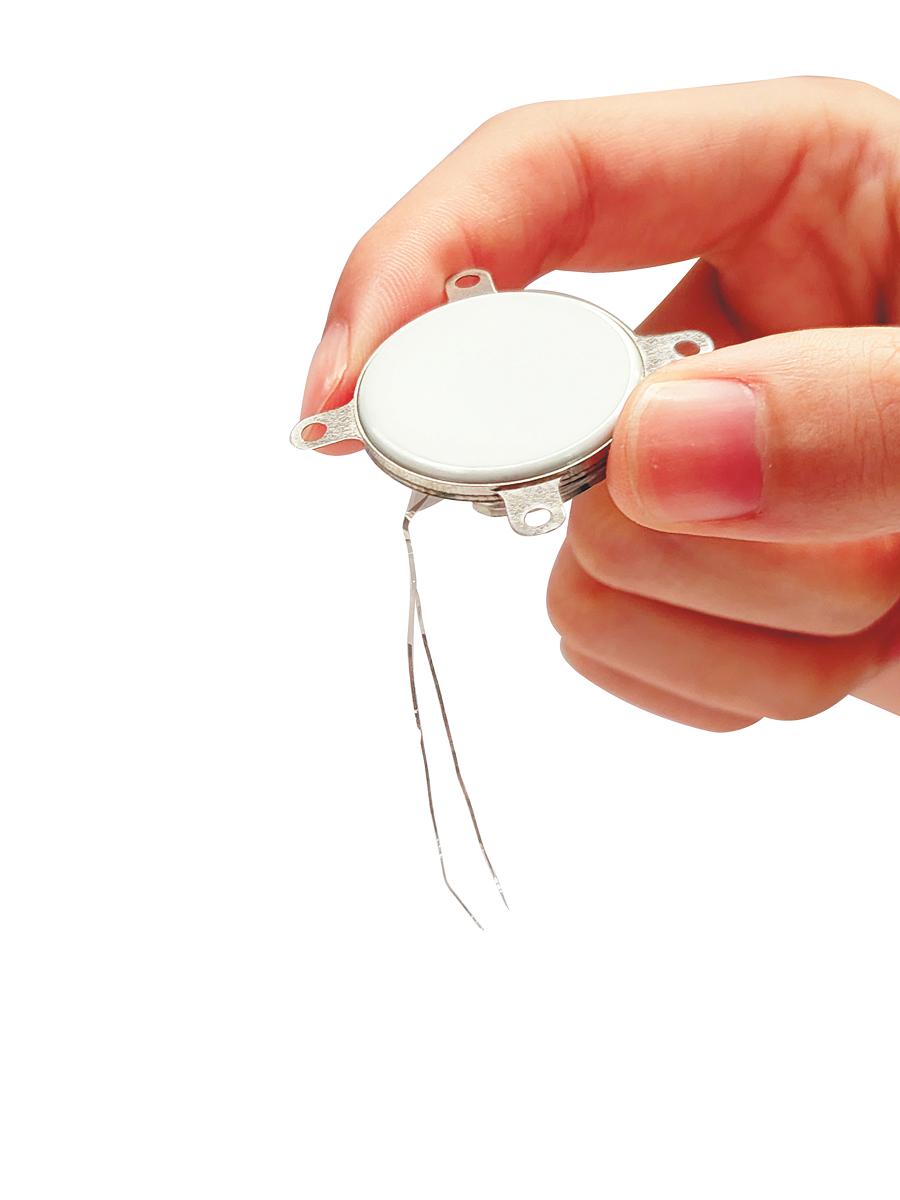
The BCI device developed by Shanghai StairMed is particularly remarkable. With 64 electrodes — each only 1 percent of the width of a human hair — it is one of the smallest and least invasive implantable BCIs in the world. The first male recipient has already used it to play chess and video racing games.
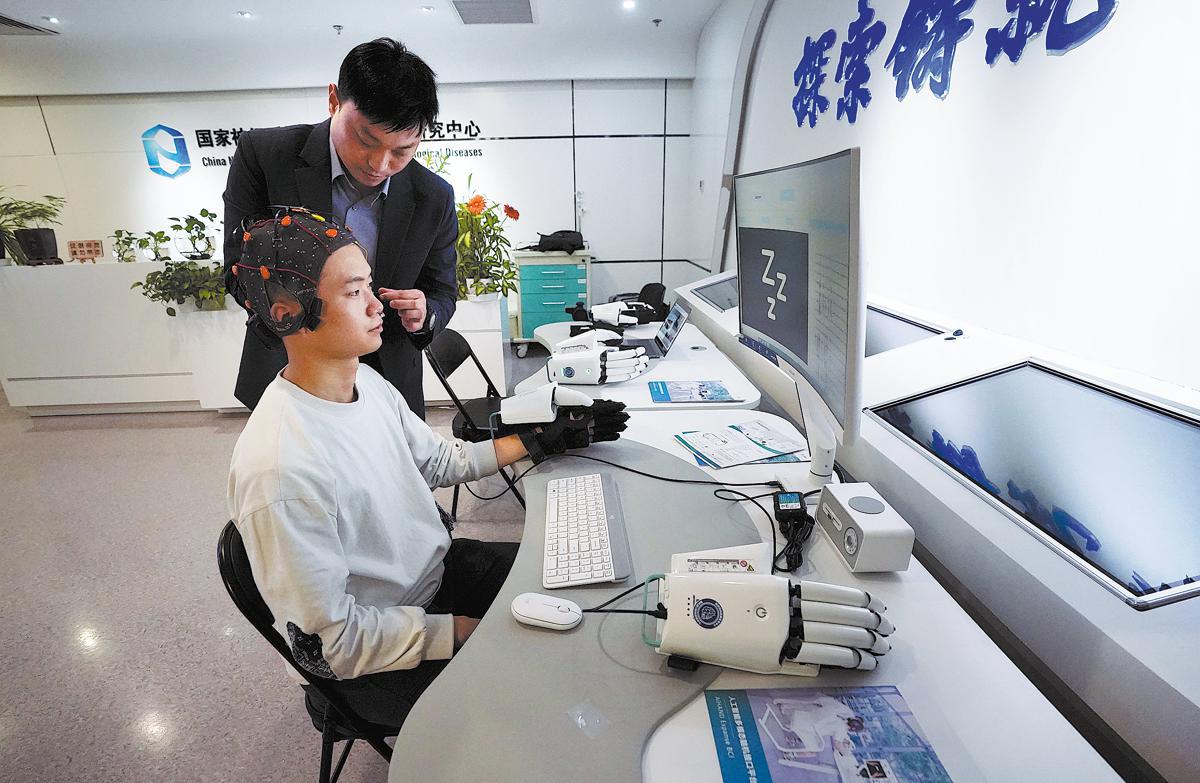
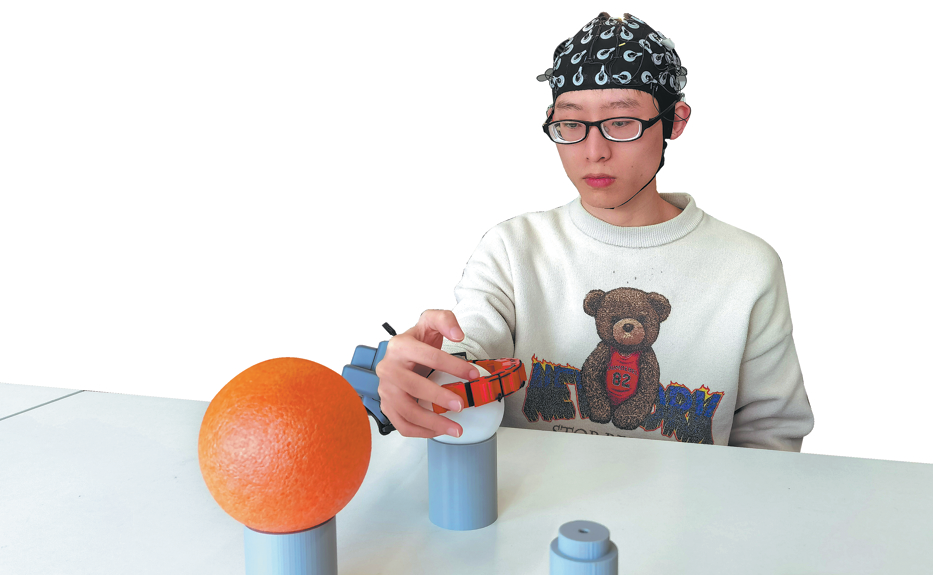
Meanwhile, other devices have taken a different technical approach. One involves placing eight probes on the dura mater, the protective outer layer of the brain, to help paralyzed individuals restore hand movement through pneumatic gloves. The first patient to receive this device, implanted in October 2023, can now eat and drink independently.
"We already lead in algorithm, implant device miniaturization and minimally invasive techniques," said a doctor involved in the clinical research. "China excels in the speed and accuracy of algorithmic decoding."
However, for patients and their families, BCI is not about technological competition — it is about hope for survival and a better life.
"Our greatest wish is for him to drink water and use the bathroom on his own," said a Tibetan daughter who signed up her ALS-afflicted father for the trial.
"Even just a little movement would make an enormous difference in our quality of life."
Lu Sheng, who has cared for his wife for four years, puts it more bluntly: "If she could use the toilet by herself, I would be content."
"Over the years, we've tried many treatments and been cheated many times. We've spent almost all our savings — over 400,000 yuan ($56,185) — on treating this illness, yet we still see no hope for a cure, or even for slowing its progress," Lu said.
"I can no longer carry her. I hope BCI technology can bring us a final glimmer of light," he said.
Many patients learn about BCI through patient groups or television news. One patient once saw a case on CCTV about another patient at Xuanwu Hospital Capital Medical University who could hold a cup after surgery. Two years have passed, and he has seen no follow-up report.
"I don't know if the technology succeeded or stalled," he said, "but I am willing to try."
A common refrain among patients and families is their refusal to give up on the technology. Despite high hopes, the clinical application of BCI still faces many obstacles.
Stringent screening is the first hurdle for candidates for the procedure. Patients should be in the proper age range, must not have other serious illnesses, and have a long enough life expectancy and strong family support.
"We screened 500 people and not one was a perfect fit," said the doctor who had been involved in clinical research. "Some hospitals screen 800 patients before finding one suitable candidate."
Surgical risk is another major concern for families. "After all, it's craniotomy — could there be infection? How long will the chip last? These are our worries," said the Tibetan daughter.
The ongoing financial burden is also a reality. Although the BCI surgery and device are free during clinical trials, the cost of treating and caring for the disease itself remains high. One patient's family said that medication alone costs nearly 80,000 yuan per year.
Family decision-making is a particularly Chinese dilemma.
"If the patient wants it but the family does not, it cannot happen," said Qu.
"Families worry that care is already exhausting — surgery would only add to the burden."