



China begins trial of faster, more detailed AI dust forecasting system









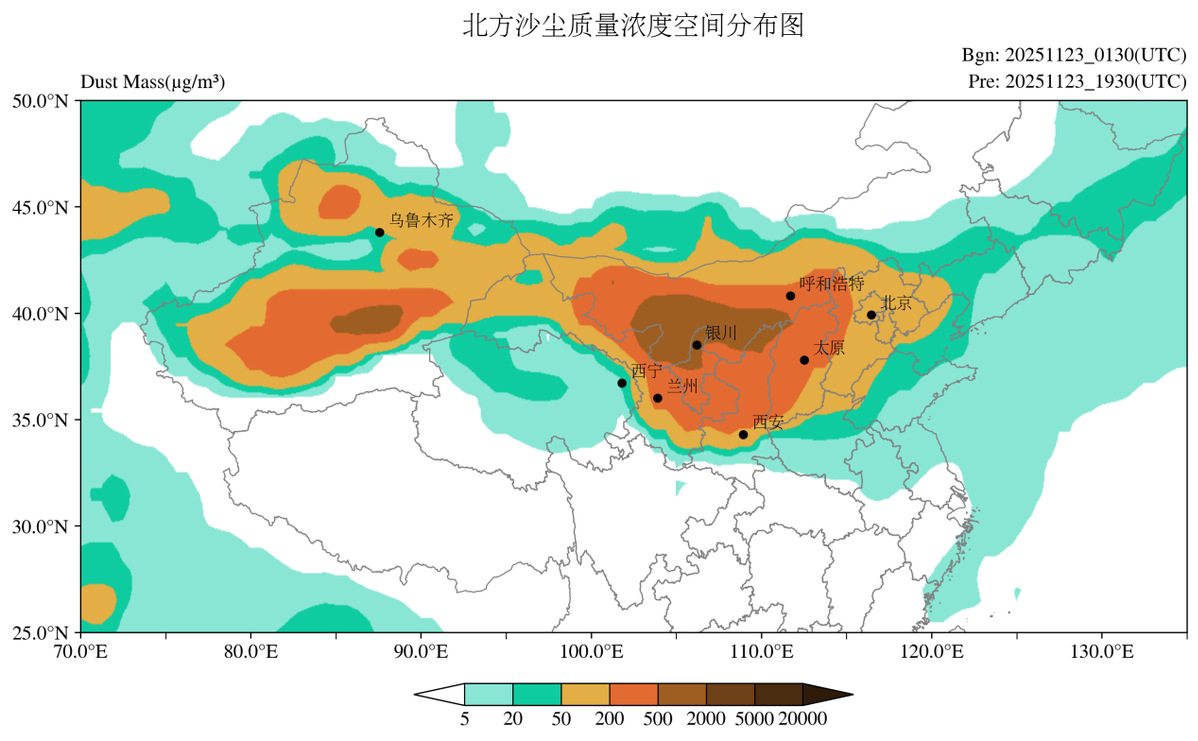
Speed is the other headline feature. Traditional physics-based models require supercomputers and long runtimes, which limit how often forecasts can be produced. The AI model runs on GPU-based hardware and generates global five-day predictions in under a minute. It updates eight times a day, giving meteorologists far more opportunities to track developing events.
"This is a major change, not only in speed but in accessibility," said Che Huizheng, a researcher at the academy. "We can now run dust forecasts on a standard desktop computer."
The improvements were highlighted during a dust event in late November. Floating dust formed in the southern Xinjiang Basin, and blowing sand was reported in eastern Xinjiang before the plume spread across parts of Qinghai, Gansu, Ningxia, and other provinces in North and Northwest China. The AI model detected warning signals two to three days ahead and issued a near real-time update early on Nov 22 that aligned closely with on-the-ground observations.




- China begins trial of faster, more detailed AI dust forecasting system
- Innovation hailed as key to success for Guangdong's fishing industry
- Beijing works to weave elderly into fabric of community life
- American receives Wudang's first social security card for non-citizen
- Deepseek founder, 'deep diver' in Nature's 2025 list of science influencers
- Former Hainan Party chief sentenced to 15 years for bribery