

High-skilled generation
Dedication and determination drive young people to be best in their professions










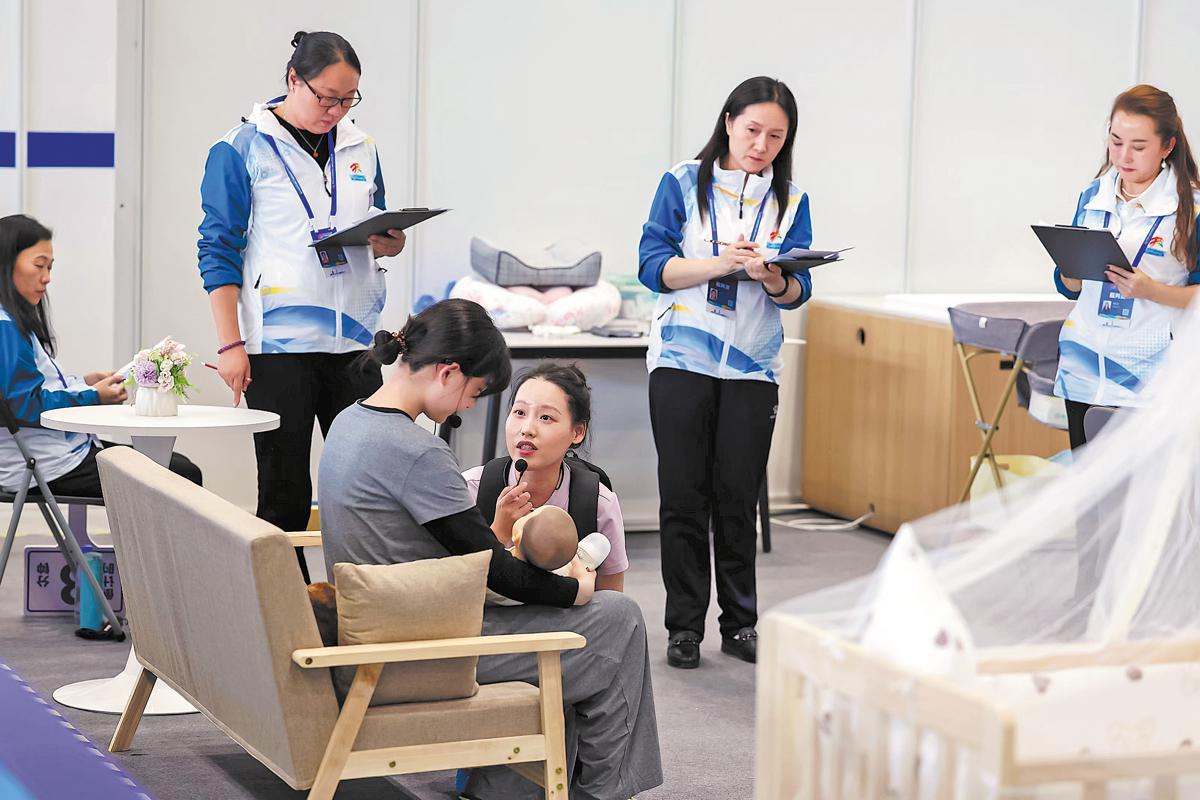
Unlike traditional nursing, the competition excluded all invasive procedures, focusing instead on noninvasive care and communication.
Judging combined subjective and objective elements. The objective part focused on the standardization and completeness of tasks, while the subjective evaluation assessed non-verbal cues, communication fluency and English proficiency, he said.
Min said preparing for the competition has improved his professional skills greatly and how to put patients' needs first and listen to their needs. He is eager to start working and put what he has learned into real-world use.
Nineteen-year-old Zhou Le from Ningbo Technical College came away from the heavy vehicle technology competition with a unique perspective. Despite his team's history of winning gold medals in previous competitions, he saw his silver medal as a "valuable wake-up call" rather than a disappointment.
"The competition spanned three days and simulated real-world breakdowns of heavy equipment," Zhou said. He works with forestry machinery and engineering vehicles like excavators, rollers and tractors.
What makes heavy vehicle repair particularly complex is that these aren't ordinary vehicles, Zhou said. They're industrial machinery with intricate systems designed for tough work environments. The competition involves diverse vehicle models and fault types, requiring extensive training to master, he said.
After the competition models were announced, Zhou dedicated three full months to preparation. "Training can be tedious at times," he said. "But the joy of learning new skills and the sense of accomplishment when a repaired vehicle starts up — it's like solving a challenging puzzle."