


Drama of a capital's birth
Play portrays how 'Zhongdu' transformed from a frontier settlement to the power center of a dynasty, Chen Nan reports.









As one of the world's oldest cities, Beijing's rich history and cultural evolution have long fascinated historians, artists, and audiences alike.
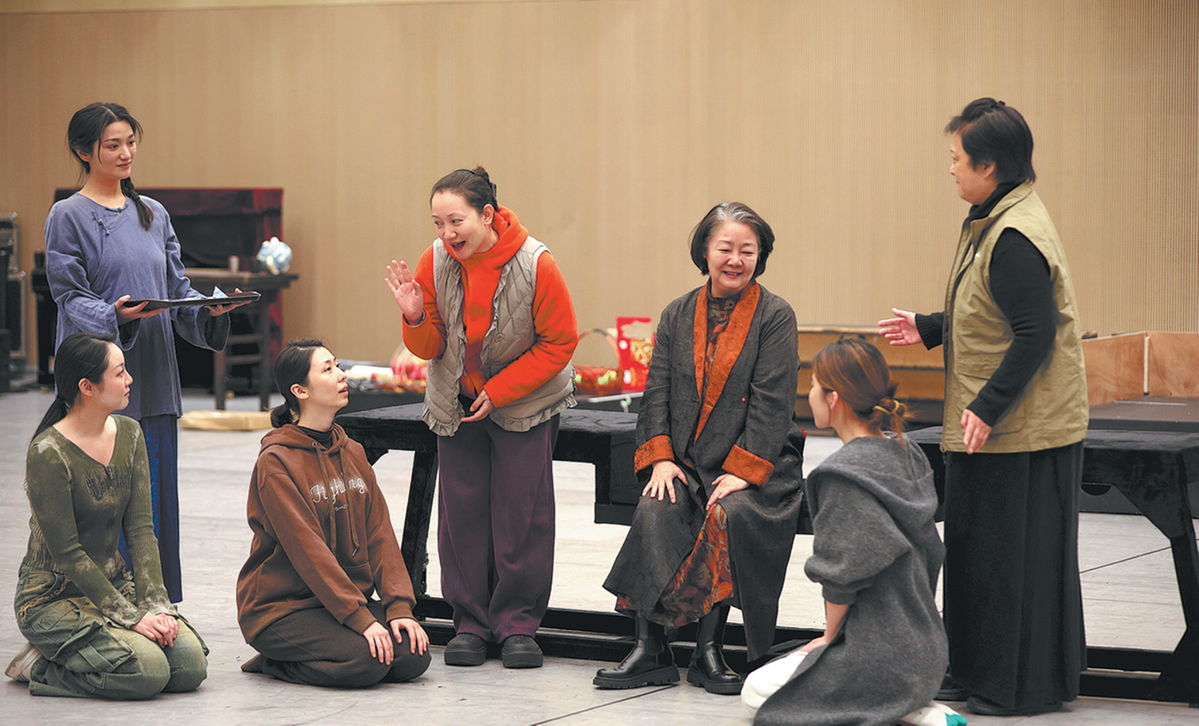
In an effort to bring this fascinating history to life in a fresh and exciting way for contemporary viewers, the National Centre for the Performing Arts in Beijing is staging a sweeping theatrical trilogy tracing the capital's origins.
This series of original plays delves into the city's transformation from a frontier settlement to the capital of a dynasty.
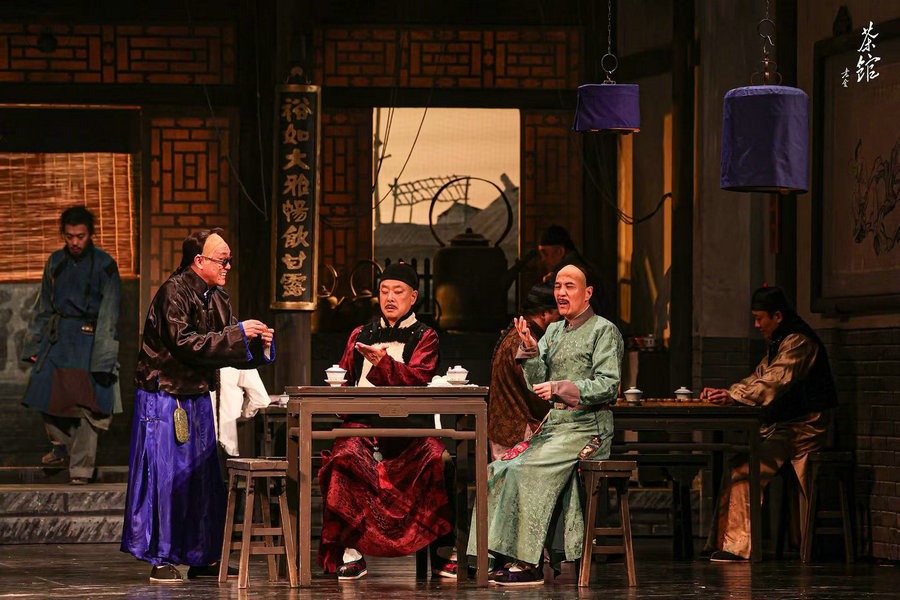
The first installment of this ambitious trilogy, Zhongdu of the Jin Dynasty, will take center stage from Saturday to Dec 22.
This historical drama explores a pivotal moment in Beijing's past — the city's emergence as the national capital when the Jin Dynasty (1115-1234) relocated its capital to present-day Beijing in 1153, renaming it Zhongdu (central capital).
It marked the first time in Chinese history that Beijing had served as the capital of a dynasty.
Written by acclaimed author Xiong Zhaozheng, whose Zhang Juzheng (a four-volume novel) won the Mao Dun Literature Prize in 2005, Zhongdu of the Jin Dynasty seeks to vividly reimagine this transformative era onstage.
"There are many fascinating events and intense conflicts hidden in the archives," says Xiong. "You have to unearth them one by one, like searching for diamonds in the wild. And when you find enough, you can string them together into a necklace. That's how the story will unfold onstage. Though I am writing about history, the emotional conflicts and stylistic language are ones that today's audience can understand and relate to."
Wanyan Liang, a member of the ruling Jurchen people, ascended the throne as the fourth emperor of the Jin Dynasty in 1149.
A visionary leader, one of his most significant decisions was to relocate the capital from Shangjing (modern-day Harbin) to Yanjing (present-day Beijing) in 1153, renaming the city Zhongdu.
This move, driven by both strategic considerations and the city's abundant resources and transportation links, not only reshaped the course of the nation's political history but also laid the foundation for Beijing's future as China's imperial capital.
Director Wang Rui, a Beijing native, reflects, "For me, like many others, the name Zhongdu was just a vague historical fact — something I knew existed, but knew little about. This production is an opportunity to fill in the gaps, and reexperience that transformation that resonates with modern audiences.
"The play transports audiences to the 12th century, capturing the challenges, hopes, and cultural exchanges that defined this era of transformation," he adds.
The cast of Zhongdu of the Jin Dynasty features a talented ensemble of actors, including Sarina, who plays the role of the elderly empress Wu Lu, a key figure who strongly opposed the relocation of the capital.
A member of the Mongolian ethnic group from the grasslands, Sarina connects deeply with the portrayal of the Jurchen people, who were nomadic and constantly striving for survival and change. "The Jurchen were a people in transition, moving from the wilderness to civilization. For me, this represents a powerful journey of transformation, and I'm excited for the audience to experience that shift alongside the characters," she says.
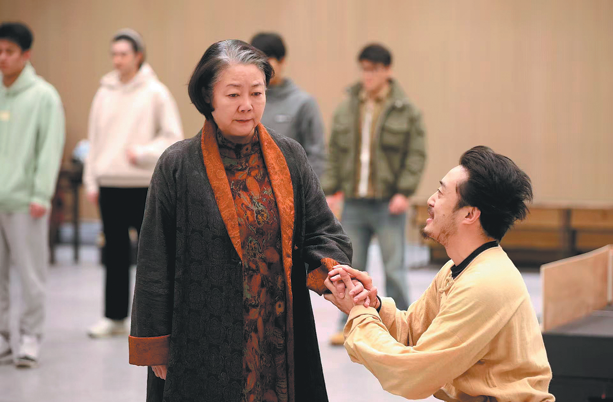
A longtime screen and stage performer, Sarina adds, "Theater has always been my sacred home. This play feels like returning to it."
Actor Zu Yongchen takes on the role of Wanyan Liang, bringing his interpretation of the emperor to life.
In Zu's portrayal, Wanyan Liang embodies a unique blend of an artist's romantic purity and a lonely reformer, while also being an ordinary man torn between duty, ambition and doubt.
The significance of the play extends beyond its dramatic retelling of Beijing's early history. According to Wang Ban, vice-president of the NCPA, Zhongdu of the Jin Dynasty highlights the historical and cultural contributions of various ethnic groups, emphasizing their shared experiences and interactions over the centuries.
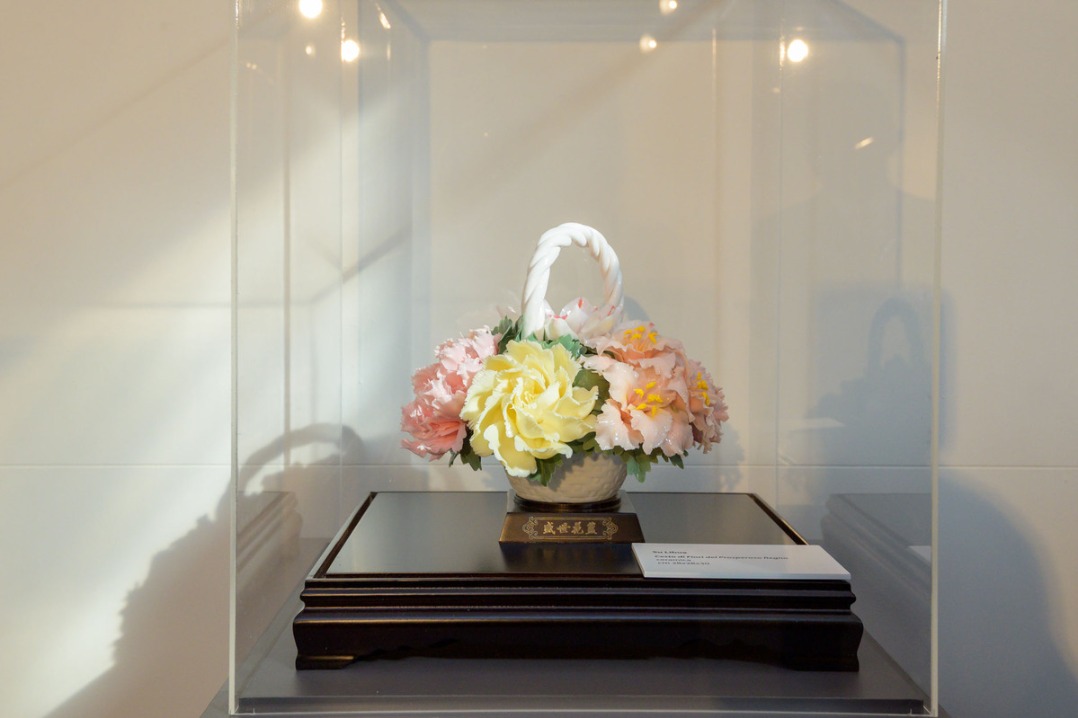
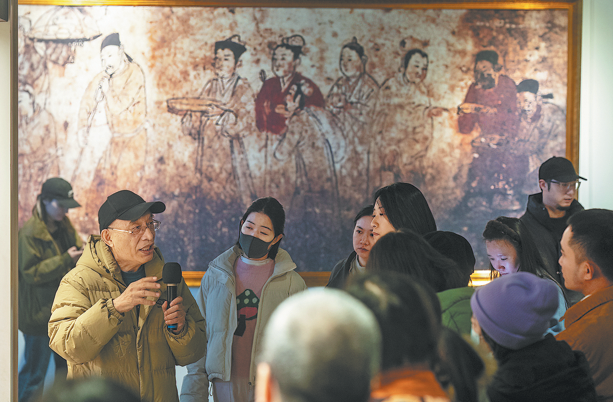
The NCPA has partnered with Jin Zhongdu Park, a historical site dedicated to the memory of this critical moment in Beijing's past. The park hosts exhibitions that showcase the events of 1153 to 1215, a period when Zhongdu was not only a thriving city but also a battleground during this transformative era.
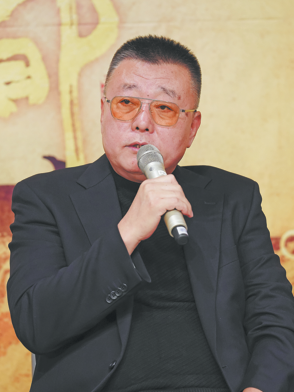
Li Jianping, former director of the Beijing History Research Association, and consultant for the play, says that the NCPA's production of Zhongdu of the Jin Dynasty is part of a larger effort to "revitalize" Beijing's cultural history, presenting it in a way that resonates with contemporary audiences.
"This play is an important initiative in preserving and presenting Beijing's history and culture in a way that speaks to today's audience," says Li. "It's about reconnecting the city's past with its present."
Contact the writer at chennan@chinadaily.com.cn