


Delivering social benefits
Initiatives taken by e-commerce platforms JD and Meituan bring relief to thousands of delivery workers









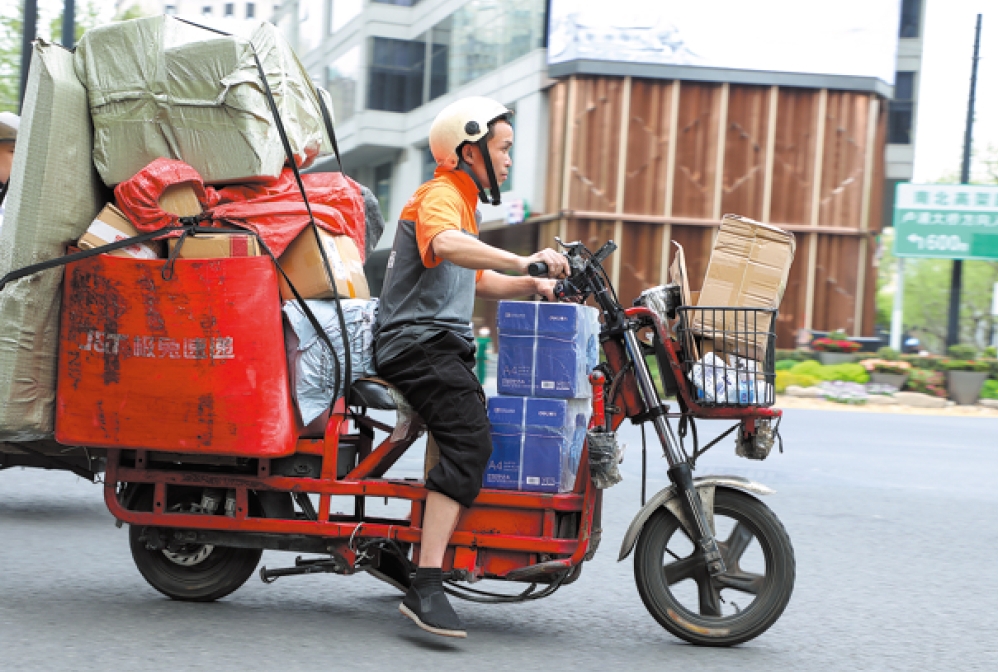
"JD's model emphasizes comprehensive social insurance coverage under full-time employment relationships, indirectly channeling part of the value created by the platform back to front-line workers through social insurance," Zhang explained. "Meituan's model focuses more on flexibility, gradually improving workers' welfare levels while maintaining the employment scale."
"Regardless of which model is adopted," Zhang concluded, "both will reshape the income distribution landscape within the platform economy."
The new forms of employment refer to flexible work arrangements that rely on digital technologies such as the internet and artificial intelligence. These jobs are often carried out in a decentralized way through platforms.
The new forms include delivery workers, livestreamers and housekeepers. According to estimates, the scale of new forms of employment in China has reached 84 million people, with an estimated 3 to 5 percent annual growth rate, the report said.
However, flexible working conditions come with trade-offs, including high risk on roads, lack of holidays and long on-call hours for delivery workers.
Many in the gig economy also face ambiguous labor relationships, which often leave them without access to social insurance.
In recent years, China has stepped up efforts to protect the rights of laborers in new forms of employment from different aspects.






- Memorial ceremony remembers victims of Nanjing Massacre
- Louvre's largest showcase in China goes on display at Museum of Art Pudong in Shanghai
- Indonesian foundation to fund students, school administrators to exchange and study in Tianjin
- Archives detailing crimes of Japanese unit released
- 'Reservoirs of primordial water' may be buried deep within Earth
- China remembers victims of Nanjing Massacre, 88 years on