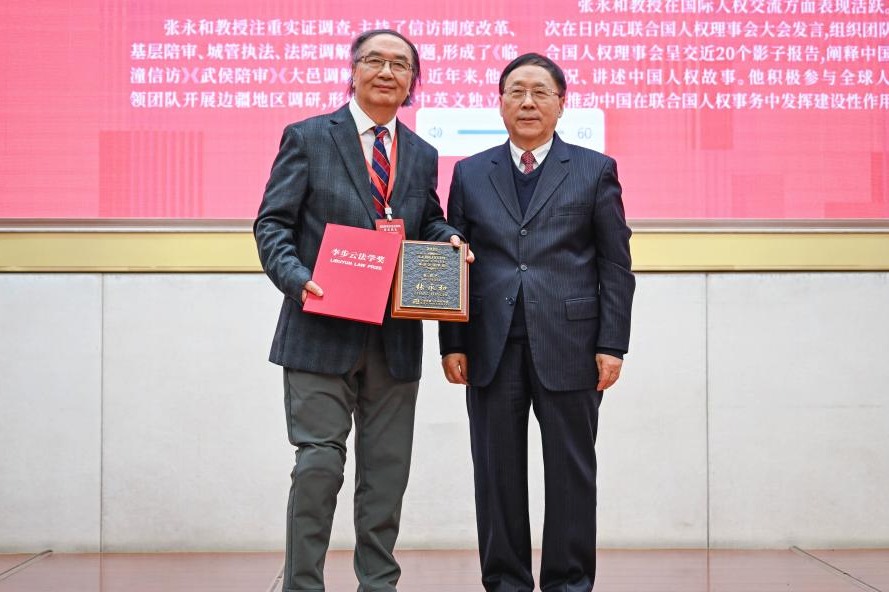



Researchers find strategies to reduce flood damage









LANZHOU — Chinese researchers have conducted a study on snowmelt floods and disaster risks in China's northwestern region, holding out promise for disaster prevention and control in the region.
With global warming and the increasing frequency of extreme events, snowmelt floods have led to significant damage, and it is critical to strengthen risk assessment, said Xu Min, a researcher at Northwest Institute of Eco-Environment and Resources of the Chinese Academy of Sciences and leader of the study.
Based on a simulation using data from 1948 to 2022, the study analyzed the evolution and distribution of snowmelt floods in Northwest China.
The results indicated that snowmelt runoffs showed increasing frequency and were more abundant in the northwestern and southwestern regions while less in the country's central and eastern regions. In northern Xinjiang Uygur autonomous region, snowmelt floods were relatively infrequent, but large, while around the Qilian Mountains in Gansu province, snowmelt floods were more frequent but of smaller magnitudes.
The longest duration of snowmelt floods was observed in the Kashgar and Yarkant rivers, according to the study. Xu said it is urgent to enhance monitoring and early warning systems, and implement corresponding disaster prevention and mitigation measures in large mountainous basins in the region.
The study results have been published in the journal Geography and Sustainability.
Xinhua



- Memorial ceremony remembers victims of Nanjing Massacre
- Louvre's largest showcase in China goes on display at Museum of Art Pudong in Shanghai
- Indonesian foundation to fund students, school administrators to exchange and study in Tianjin
- Archives detailing crimes of Japanese unit released
- 'Reservoirs of primordial water' may be buried deep within Earth
- China remembers victims of Nanjing Massacre, 88 years on