


Turning negatives into positives









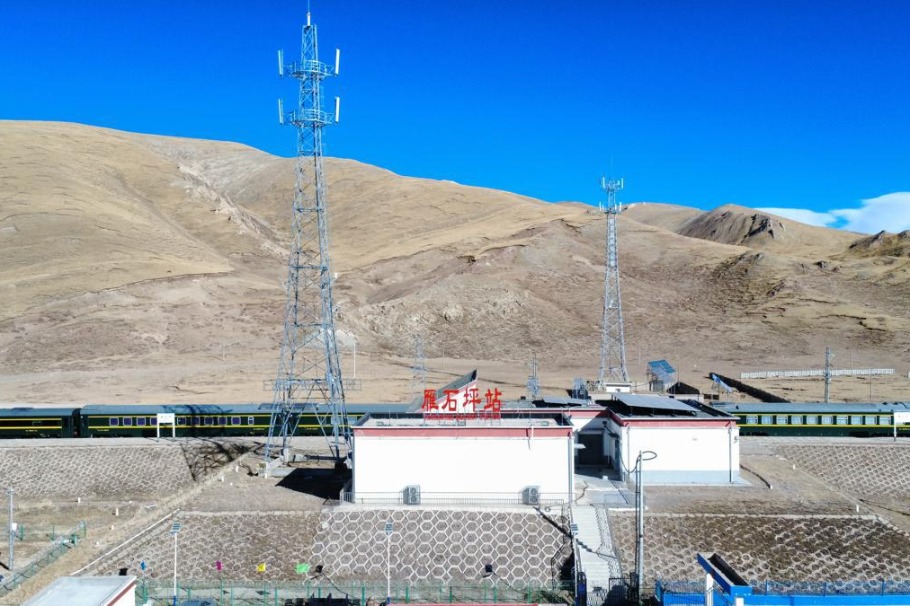
Yet it largely lacked electricity when I first arrived six years ago. Our first projects were mostly buying solar panels for schools.
The area is also too remote to connect to the fossil-fuel energy grid.
And while Qumalai's daily temperature fluctuations are not as severe as those in Desheng, the weather is always chilly and ultimately far more punishing.
It snows 10 months a year.
But climate change's relative warming of this chunk of the Qinghai-Tibet Plateau has melted patches of the subterranean permafrost that previously propped up the precipitation that nourished the grass that grows on the topsoil - or, increasingly, doesn't.
Qumalai's grass is becoming sand at an exponential rate.
This has required Yushu's nomads to curb herding - the primary source of incomes since crops cannot grow in permafrost.
But upon witnessing the success of the Desheng model, I wonder if a modified version of it could prove a solution in places such as Qumalai.
That is, locations where disadvantages such as insufficient precipitation and extreme temperatures are at least mitigated and, at best, turned into advantages through initiatives such as greenhouses and solar farms.
Perhaps this development strategy's achievements are the writing on the wall.
That is, with a meaning that extends far beyond the village - perhaps to places such as Yushu and further afield in the world.




- Investigation team takes action over false projects and winning bids in Hubei
- New substation boosts green power supply to Xiong'an
- Wuhan court adopts 'forget it' plush toy to help settle disputes
- Beijing mobilizes for winter's first major snowfall
- Uzbek med students train in Lanzhou under Belt and Road exchange
- PLA warns Philippine jets that illegally entered airspace over Huangyan Island